The best energy plan for your home
Last Updated: April 29, 2026
Why Your Texas Electric Bill Is Going Up in 2026 — Even If Your Rate Did Not Change
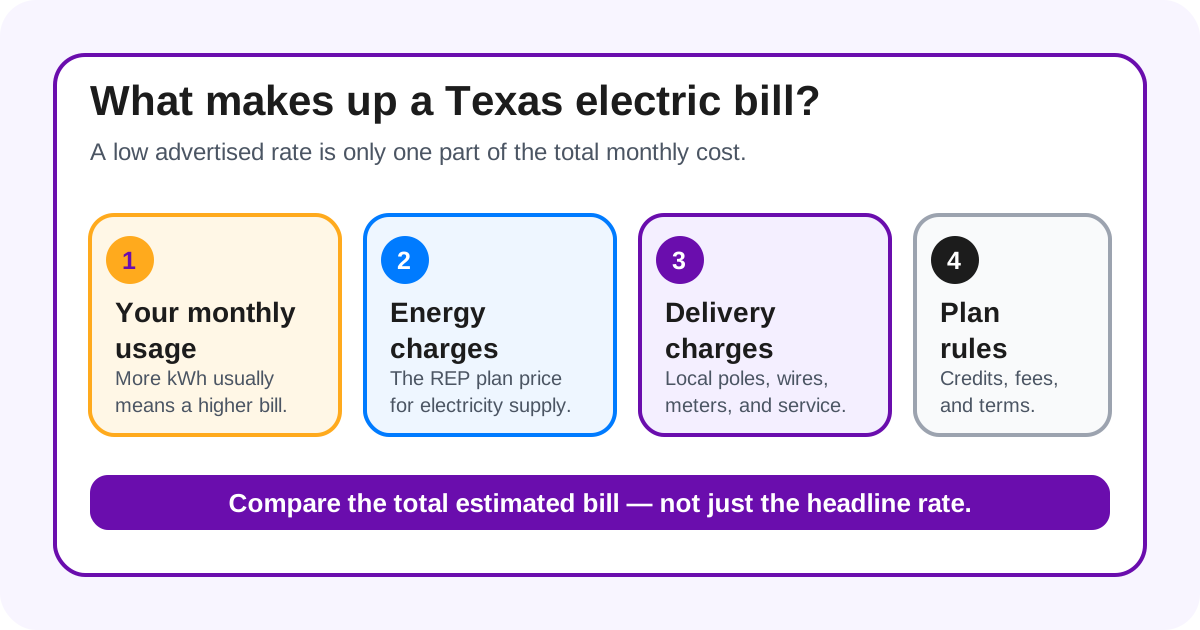
Texas electricity shoppers often focus on the advertised cents-per-kWh rate. That number matters, but it is not the whole bill. Usage, delivery charges, plan rules, and grid-related costs can all push the final amount higher.
1. The reason this topic matters in 2026
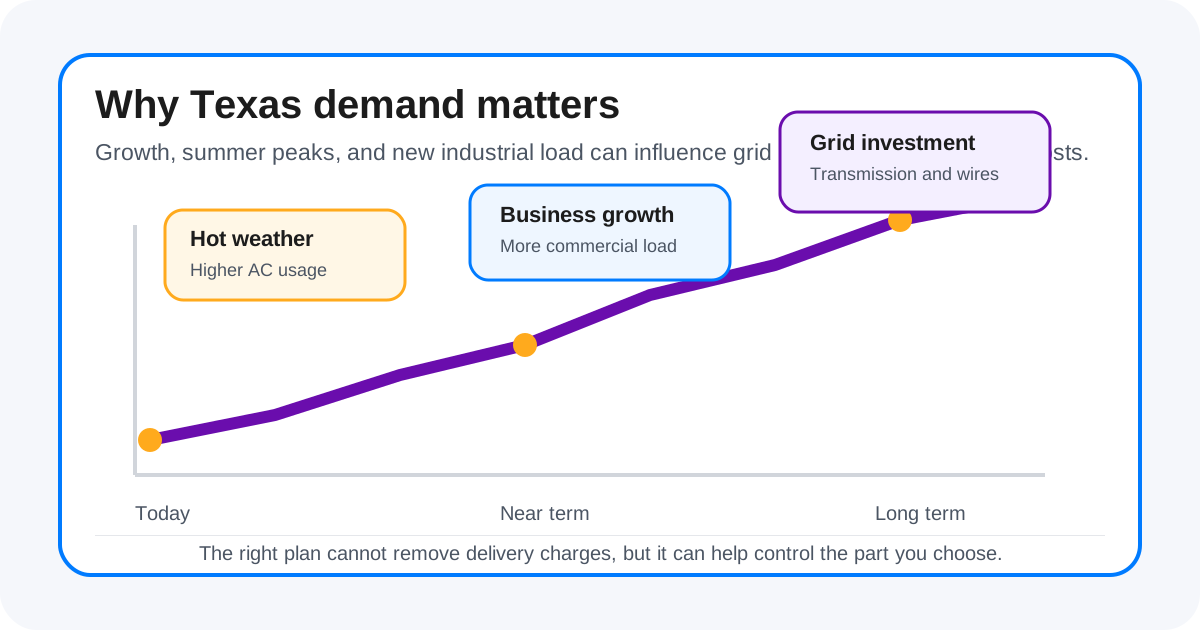
Texas keeps adding homes, businesses, data centers, industrial projects, and extreme-weather demand to the electric system. ERCOT’s April 2026 preliminary long-term forecast projected very large potential growth by 2032 and noted that the forecast was higher than expected future load growth because the way large loads are identified is changing.
That does not mean every forecasted project will get built, and it does not mean every customer will see the same increase. It does mean Texans should pay closer attention to how electric bills are built, because more demand usually requires more planning, more infrastructure, and more careful shopping.
2. Your bill has two major buckets: energy and delivery
In most deregulated Texas areas, your Retail Electric Provider, or REP, sells you the electricity plan. That is the part you choose when you shop online, review an Electricity Facts Label, or renew a contract.
The delivery company, also called the TDU or TDSP, owns and maintains the poles, wires, meters, and local delivery system. In many parts of Texas, that company is Oncor, CenterPoint, AEP Texas, TNMP, or LP&L.
You may receive one bill from your REP, but that bill can include both the supply side and the delivery side. That is why a customer can change electric providers and still see the same delivery company listed for outages, meter service, and local infrastructure.
3. What are TDU delivery charges?
TDU delivery charges are the regulated charges tied to moving electricity across the local delivery system. Oncor explains that it owns the poles, wires, and meters in its service area, and that delivery charges shown on a REP bill reflect the cost of delivering electricity to the customer.
These charges are not the same as the REP’s energy price. They are based on approved tariffs and can change from time to time. They can also feel higher during high-usage months because many delivery charges are tied to the number of kWh used.
What you can choose
You can choose your REP, plan term, rate structure, renewable content, deposit options, and plan features in deregulated areas.
What you usually cannot choose
You usually cannot choose the local delivery company assigned to your address. That company is based on the service territory.
4. Why your bill can rise even when your rate looks the same
A fixed-rate plan can protect the energy-rate portion of your bill, but it does not freeze every possible cost. Your final bill can still change when your usage changes, when TDU delivery charges change, or when your plan includes fees, credits, or usage rules that only work at certain monthly levels.
For example, a plan may look great at exactly 1,000 kWh but become less attractive at 700 kWh or 1,600 kWh. Another plan may include a monthly base charge, a minimum usage fee, or a bill credit that only applies after you cross a specific threshold.
| Bill item | Why it can change | What to check |
|---|---|---|
| Monthly usage | Air conditioning, heating, pool pumps, EV charging, business equipment, or longer billing cycles. | Compare your last 12 months of kWh usage before choosing a plan. |
| Energy charge | Your REP plan rate, contract type, and renewal price. | Look for the energy charge and formula inside the EFL. |
| Delivery charge | Regulated TDU/TDSP tariff changes and usage-based delivery costs. | Review the delivery section on your bill and EFL. |
| Plan rules | Bill credits, base charges, early termination fees, or minimum usage fees. | Do not shop by the headline rate alone. |
5. The Electricity Facts Label is your best comparison tool
The Public Utility Commission of Texas says the Electricity Facts Label is intended to let customers compare information in a standardized format and choose a Retail Electric Provider based on what matters to them. That is why every serious plan review should start with the EFL, not just the marketing headline.
When you open the EFL, look for the average price at 500, 1,000, and 2,000 kWh. Then look deeper for the actual energy charge, delivery charges, base charge, early termination fee, contract term, renewable content, and any bill-credit language.
For more help, review our pages on early termination fees and electricity deposits. Those two items can affect the real cost of switching or signing up for service.
6. Common plan traps that make bills feel higher
The cheapest advertised plan is not always the cheapest plan for your home or business. Some rates are designed to look best at one exact usage level, especially 1,000 kWh for residential shopping.
- Bill credits: A plan may give a credit only after you use a minimum amount of electricity.
- Minimum usage fees: A customer who uses less than the required amount may pay more than expected.
- Base charges: A monthly fee can make a low-usage bill look expensive.
- Variable or indexed pricing: The rate may move with market conditions instead of staying fixed.
- Renewal pricing: A plan that was competitive last year may not be competitive when it renews.
7. Residential customers: what to do before you renew
Before renewing, pull your past usage and compare plans against your real kWh pattern. A household that uses 600 kWh in mild months and 2,000 kWh in summer should not choose a plan based only on the 1,000 kWh advertised average.
Also check whether your current plan has an early termination fee and when your contract expires. If your contract is almost over, you may be able to shop before the renewal price takes effect.
- Review your last 12 months of usage.
- Open the EFL for each plan you are considering.
- Compare the estimated total bill at your actual usage levels.
- Watch for credits, base charges, and minimum usage language.
- Enter your ZIP code on The Power Choice to compare available options.
8. Business customers: the bill can be more complicated
Commercial electricity customers often need a more detailed review because usage can be tied to operating hours, equipment, square footage, seasonality, and sometimes demand. A restaurant, office, warehouse, medical clinic, church, or retail store may each have a different load pattern.
Some business customers may also see differences based on meter type, usage volume, contract term, tax status, or whether the account is above certain demand thresholds. That is why businesses should compare contract terms and total estimated costs instead of choosing a plan based only on the lowest advertised energy rate.
9. What The Power Choice helps you compare
The Power Choice is built to help Texans look past the headline rate. The goal is to compare plans in a way that makes sense for the customer’s ZIP code, usage, home, business, and contract needs.
A better shopping process asks: What will this plan likely cost at my usage? What happens if my usage changes? Are there credits or fees? Who is my delivery company? What happens at renewal? Those answers are more useful than simply picking the lowest number on a search results page.
10. FAQ: Texas electric bills in 2026
Can I avoid TDU delivery charges?
Generally, no. If your home or business uses the local delivery system, delivery charges are part of the electric bill. What you can control is the REP plan you choose and how well that plan matches your usage.
Who do I call during a power outage?
Outages are handled by the local delivery company, not usually the REP. You can use our power outage helper page to find the right utility contact.
Is the 1,000 kWh price the same as my actual bill?
Not always. The 1,000 kWh figure is a standardized comparison point. Your actual bill depends on your usage, plan formula, delivery charges, taxes, and any fees or credits.
Further reading & sources
These sources were used to support the article’s discussion of Texas demand growth, EFLs, delivery charges, and electricity price trends.
- ERCOT: Preliminary Long-Term Load Forecast for Years 2026–2032
- Public Utility Commission of Texas: Electricity Facts Labels for Residential Electric Service
- Oncor: Delivery Charges 101
- Reuters: U.S. consumers face rising electricity prices despite clean power savings
- The Texas Tribune: ERCOT demand forecast and planning discussion