The best energy plan for your home
Last Updated: May 14, 2026
LP&L Lubbock Business Electricity Rates: Compare Commercial Plans
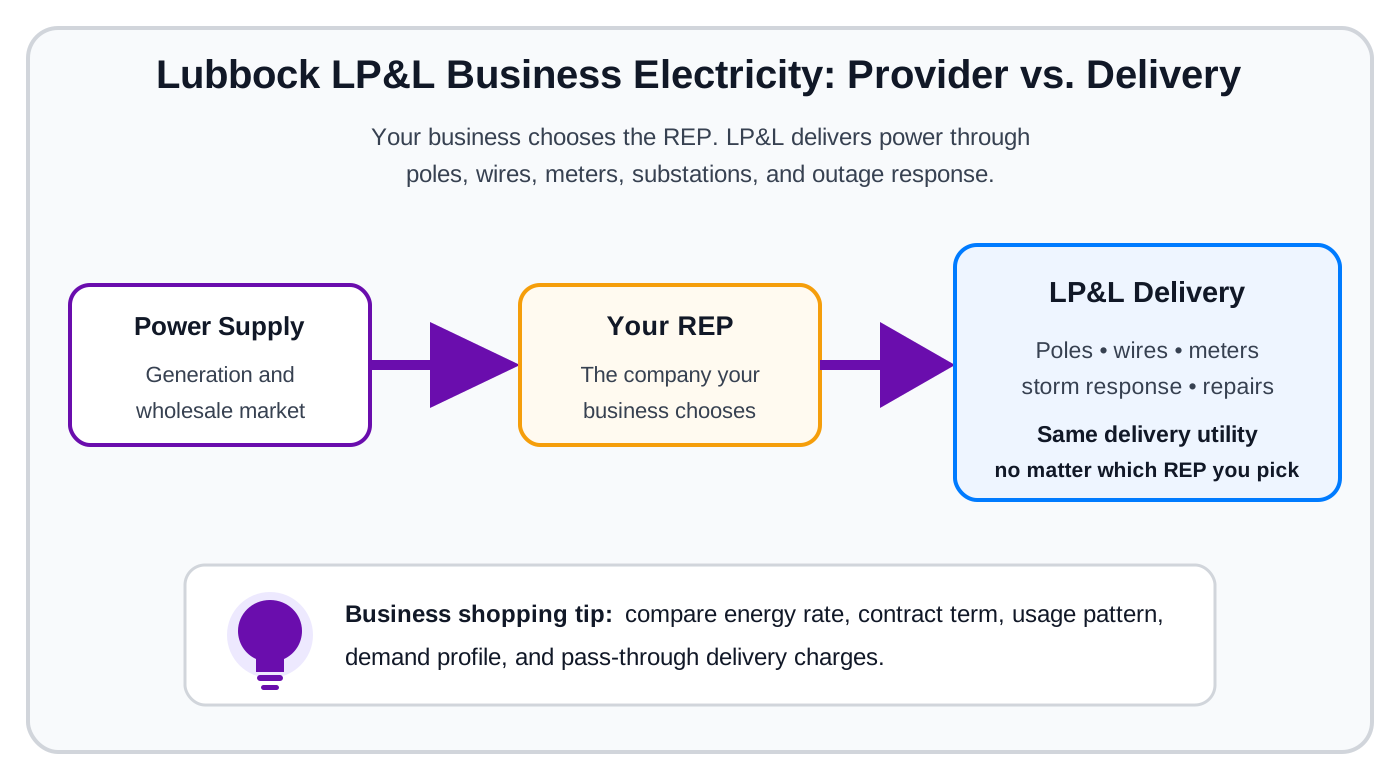
Businesses in the Lubbock Power & Light service territory can shop for their retail electric provider, while LP&L remains the local delivery utility. That means your business can compare commercial electricity plans while LP&L handles poles, wires, meters, delivery service, and outage response.
Compare current LP&L commercial electricity rates
Use the live commercial-rate section below to compare current LP&L business electricity plans. The default ZIP code is set for Lubbock, but your exact service address, usage, demand, and business profile can affect available offers.
For a broader quote or help comparing plans, visit The Power Choice and enter your ZIP code so your business can review options for the correct utility area.
How LP&L fits into your business electric bill
In the competitive retail market, the REP sells the electricity plan to your business and usually sends the bill. Lubbock Power & Light remains the delivery utility for LP&L meters, so it is responsible for delivery infrastructure, metering, and many outage-related functions.
LP&L’s current competitive-retailer access tariff states that its service is subject to the delivery service tariff approved by the City Council and that non-residential premises are served under the appropriate Secondary or Primary service schedule. Switching REPs can change the supply rate and contract terms, but it does not change which utility delivers power to your meter.
Your REP controls
- Energy price and contract term
- Fixed, indexed, variable, or custom business offer
- Billing format, renewal terms, and customer service
LP&L controls
- Delivery infrastructure in the LP&L service territory
- Metering and local delivery service
- Outage response, downed-line issues, and restoration work
LP&L commercial delivery charges to know
Commercial delivery charges depend on the rate class assigned to the meter. For many small businesses in Lubbock, the key starting point is whether the account is Secondary Service less than or equal to 10 kW or a larger non-residential service class where demand can matter more.
LP&L’s tariff lists delivery system charges, transition charges, franchise fees, and for larger accounts, demand charges. Use this table as a simple shopping guide, not as a complete bill calculator.
| LP&L commercial rate category | Base fixed charges | Base delivery component | Business meaning |
|---|---|---|---|
| Secondary Service ≤ 10 kW | No monthly availability charge listed for standard service | $0.05378/kWh delivery + $0.00167/kWh transition + $0.00517/kWh franchise fee | Often relevant for smaller shops, offices, and low-demand commercial meters. |
| Secondary Service > 10 kW | No monthly availability charge listed for standard service | $0.00947/kWh delivery + $11.32/kW demand + transition and franchise fee | Demand matters. The cheapest kWh rate may not be the cheapest total bill. |
| Primary Delivery System Service | Rate-class specific delivery pricing | $0.00722/kWh delivery + $9.28/kW demand + transition and franchise fee | Useful for larger or more complex business service situations. |
Business tip: compare the all-in price, not just the advertised cents-per-kWh rate. For commercial accounts, your demand pattern and rate class can matter as much as your total kWh usage.
Why the cheapest posted business rate may not be the best deal
A low advertised rate can be helpful, but commercial electricity shopping should consider how the plan behaves under your actual usage profile. A restaurant, warehouse, small office, church, retail store, medical office, and machine shop can all use power differently.
- Check whether the price is fixed for the full term or can change.
- Compare contract length, renewal language, and early termination terms.
- Review whether pass-through charges are billed separately or bundled.
- Know whether demand charges, usage swings, or seasonal peaks affect your account.
Where the LP&L service territory matters for SEO and shopping
LP&L serves the Lubbock area, and businesses should shop by service address or ZIP code because offers are tied to the delivery utility and meter location. A business with a Lubbock mailing address still needs to confirm the meter is actually in the LP&L territory.
For business owners searching phrases like “cheap business electricity Lubbock,” “LP&L commercial electricity rates,” “business electric plans near me,” or “lowest commercial electricity rates in Lubbock,” the important first step is confirming the utility and rate class.
A simple checklist before you choose an LP&L business plan
- Find a recent bill and confirm your ESI ID, ZIP code, and delivery utility.
- Review 12 months of kWh usage if available.
- For larger accounts, review monthly peak demand or request interval usage.
- Compare multiple terms, not just one 12-month plan.
- Ask whether the quoted rate includes or excludes delivery pass-through charges.
- Confirm renewal and termination language before signing.
Outages, service issues, and who to contact
If the issue is a power outage, downed line, or delivery equipment problem, contact LP&L through the outage resources. LP&L says customers can call the 24-hour outage line at 806-775-2509, text or email customer service, or view the live outage map.
If the issue is your plan price, renewal, contract, billing format, or supplier terms, that is usually a retail electric provider question. Your business may still be able to shop for a better commercial electricity plan before renewal.
FAQ: LP&L business electricity rates
Can my business switch away from LP&L?
No. Your business can shop for the retail electric provider, but LP&L remains the delivery utility when your meter is in the LP&L service territory.
Why do delivery charges still appear after switching providers?
Delivery charges are utility pass-through charges for the local delivery system. They can appear on the bill regardless of which REP your business chooses.
What makes business electricity different from residential electricity?
Business accounts may be affected by demand, load factor, custom terms, contract volume, and usage shape, not only total kWh.