How to Switch Electric Providers in Texas Without Interrupting Service
Switching electric providers in Texas is usually easier than people expect. The key is knowing when to switch, how to compare the real price, and what to watch for after the change is complete.
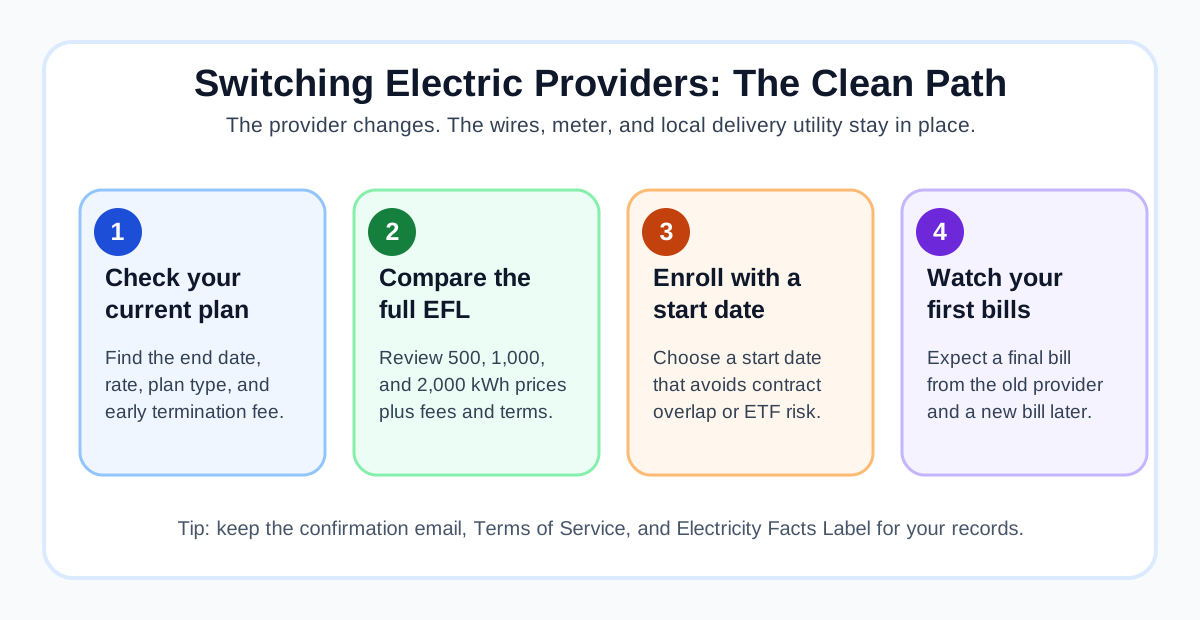
The short version: what changes when you switch?
When you switch electric providers, you are usually changing the company that sells you the electricity plan and sends your retail bill. You are not changing the physical poles, wires, meter, or local delivery company that keeps power flowing to your home.
That is why a normal provider switch should not interrupt service. Your local delivery company still handles outages, meter reads, and delivery infrastructure, while the new retail electric provider handles your plan, price, customer service, and billing terms.
In Texas, the Public Utility Commission of Texas electricity FAQ is a helpful starting point for consumer questions about switching, electric service, and provider responsibilities. The Power Choice also keeps consumer guides on topics like early termination fees and deposits so customers can compare plans without getting surprised later.
Step 1: Confirm that your address has electric choice
Most customers in deregulated Texas areas can choose a retail electric provider, but not every address has the same choices. Some municipal utilities and electric cooperatives may not participate in the competitive market, so the first step is confirming that your ZIP code and service address are eligible.
If your home is in a competitive area, your plan choices will generally depend on the service address and the local delivery utility territory. Major Texas delivery companies include Oncor, CenterPoint, AEP Texas, TNMP, and LP&L, and they remain responsible for delivery service even after you pick a different retail provider.
This distinction matters because a provider switch is not the same as a utility switch. You can compare retail plans, contract lengths, renewable content, and billing features, but your local delivery charges and outage reporting process will continue to follow the delivery company assigned to your address.
Step 2: Review your current contract before you shop
Before picking a new provider, pull up your latest bill, your current Terms of Service, and your Electricity Facts Label. These documents help you see what you are paying today and whether there is a cost to leave early.
Look for these items first:
- Contract end date: the day your fixed-term plan ends.
- Early termination fee: the charge that may apply if you leave before the allowed window.
- Current price structure: fixed, variable, indexed, time-of-use, bill credit, or tiered.
- Base charge and minimum usage rules: fees that can change the real monthly cost.
- Renewal or holdover language: what happens if you do nothing when the plan expires.
The current rate on your bill is useful, but it is not enough by itself. A plan with a lower advertised rate can still cost more if it has a base charge, a usage credit that only works at one usage level, or a fee that does not match how your household uses electricity.
Step 3: Time the switch around your contract end date
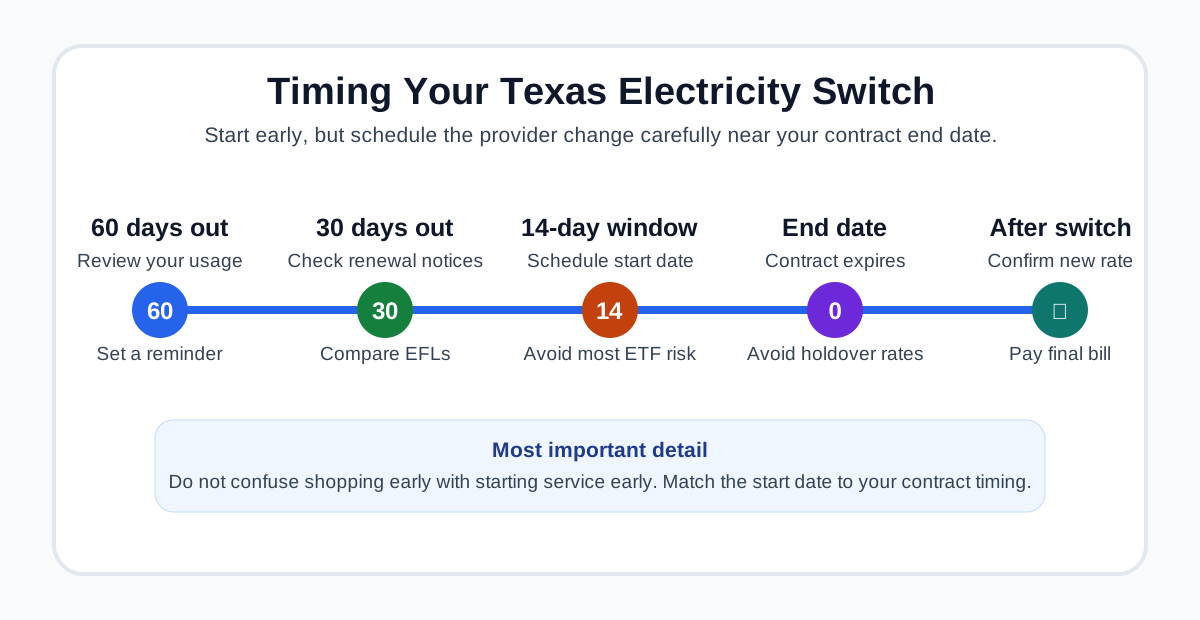
Timing is one of the biggest money-saving details. The PUCT FAQ states that a residential customer can switch without an early termination charge if the switch is no earlier than 14 days before the contract expiration date. That means the start date matters, not just the day you begin shopping.
A good rule is to begin reviewing options 45 to 60 days before the contract ends, compare serious offers around 30 days before the end date, and schedule the new service date inside the allowed window. This gives you time to avoid a rushed decision while still protecting yourself from an avoidable early termination fee.
Waiting too long can also be expensive. If a fixed contract expires and you do not select a new plan, your provider may move the account to a month-to-month renewal or holdover product. That can be flexible, but it can also be higher than the fixed offers available in the market.
Step 4: Compare the Electricity Facts Label, not just the headline rate
The Electricity Facts Label, often called the EFL, is the most important comparison document. It shows the average price at different usage levels, contract term, energy charge, base charge, delivery charge assumptions, renewable content, and early termination information.
Compare each plan at the usage level closest to your real monthly pattern. A household using 650 kWh per month may not get the same result as a household using 1,900 kWh per month, even if both see the same advertised price on a shopping page.
What to compare first
- 500, 1,000, and 2,000 kWh average prices
- Energy charge and base charge
- Delivery charge pass-throughs
- Usage credits or minimum usage charges
- Contract length and early termination fee
What to avoid
- Choosing only the lowest advertised number
- Ignoring bill credits that depend on usage
- Missing a monthly base charge
- Forgetting the end date
- Assuming every “green” plan is priced the same
The best plan is not always the lowest rate at exactly 1,000 kWh. The best plan is the one that fits your address, usage pattern, risk tolerance, move plans, and contract timing.
Step 5: Choose the plan type that fits your household
A fixed-rate plan is popular because it gives price stability for the energy portion of the bill during the contract term. Delivery charges can still change if the delivery utility tariff changes, but the retail energy rate is designed to stay fixed under the contract.
Variable-rate plans can provide flexibility, but the price can change from month to month. Time-of-use plans, free-night plans, and bill-credit plans can work for some households, but they need a closer look because the savings depend heavily on when and how much electricity you use.
| Plan type | Best fit | Watch for |
|---|---|---|
| Fixed-rate | Customers who want predictable pricing during the contract. | Contract length, ETF, and delivery charge changes. |
| Variable-rate | Short-term flexibility or uncertain move timing. | Monthly price changes and renewal risk. |
| Bill-credit or tiered | Customers with steady usage near the credit level. | A higher bill if usage misses the target range. |
| Time-of-use | Customers who can shift usage to lower-cost hours. | Higher prices during non-discounted periods. |
Step 6: Enroll and schedule the start date
Once you choose a plan, enrollment normally requires your service address, contact information, preferred start date, and identity verification. Some providers may request a deposit depending on credit, payment history, or plan type, so review the provider’s deposit terms before submitting the enrollment.
For a normal provider switch at the same address, the new provider generally sends the switch request through the Texas market process. You usually do not need a technician visit, and you usually do not need to call the old provider to make the switch happen.
Do keep copies of the Terms of Service, EFL, Your Rights as a Customer document, confirmation email, and selected start date. The Power to Choose FAQ also notes that customers may cancel a switch within three business days from the time they receive the Terms of Service agreement, and PUCT Rule 25.474 addresses the retail provider selection and rescission process.
What happens after the switch?
After the switch is processed, your old provider should issue a final bill through the last day it served the account. Your new provider should begin billing from the new start date forward, often after the next meter read or billing cycle.
It is normal to receive two bills around the transition period: one final bill from the old provider and a later bill from the new provider. You are not paying twice for the same electricity if the service dates do not overlap.
Review the first new bill carefully. Confirm the plan name, contract term, energy charge, base charge, delivery charges, and any usage credit rules match the documents you accepted during enrollment.
Common switching mistakes to avoid
Most switching problems happen because the customer rushed the comparison or missed a timing detail. A few minutes of checking can prevent months of frustration.
- Starting service too early: shopping early is smart, but the new service start date should be coordinated with your current contract.
- Ignoring the EFL: the advertised rate may not show how the plan works at your usage level.
- Forgetting auto-pay: cancel or update auto-pay after the final bill clears, not before.
- Missing the first bill review: compare the first bill to the EFL and Terms of Service.
- Assuming moving and switching are identical: move-ins, move-outs, and same-address switches can have different steps.
Moving homes vs. switching at the same address
If you are moving to a new home, you are not only switching providers; you are setting up service for a new address. You may be able to choose a new provider for the new address, but you should also close out or transfer the old account properly.
If you are leaving your current service address, ask the current provider what proof it needs to close the account without an early termination fee. If you are staying at the same address, focus on the contract end date, start date, EFL comparison, and final bill.
Switching checklist
Use this checklist before you submit an enrollment:
- Confirm your address is in a competitive electric choice area.
- Find your current contract end date and early termination fee.
- Review your usage history for the last 12 months if available.
- Compare the EFL at 500, 1,000, and 2,000 kWh.
- Choose a plan type that fits your household usage pattern.
- Schedule the new start date around your contract timing.
- Save the EFL, Terms of Service, confirmation email, and start date.
- Watch for the final bill from the old provider and first bill from the new provider.
FAQ: switching electric providers in Texas
Will my power go out when I switch?
A normal provider switch should not interrupt service because the local delivery utility continues delivering electricity to the address.
Do I need to call my old provider?
For a standard same-address switch, the new provider generally handles the market switch request. You should still watch for the old provider’s final bill.
Can I switch before my contract ends?
Yes, but review the timing carefully. The PUCT FAQ says residential customers can avoid an early termination charge when the switch is no earlier than 14 days before the contract expiration date.
Further reading & sources
- Public Utility Commission of Texas: Electricity FAQ
- Power to Choose: Frequently Asked Questions
- PUCT Rule 25.474: Selection of Retail Electric Provider
- PUCT Rule 25.475: General Retail Electric Provider Requirements and Information Disclosures
- The Power Choice: Early Termination Fee Guide
- The Power Choice: Deposit Information