Last Updated: April 30, 2026
Are Home Batteries Worth It in Texas? Backup Power, Solar Storage, and What to Ask Before You Buy
Home batteries are moving from “nice-to-have” solar add-ons to serious backup-power tools. For Texas homeowners, the right answer depends on outage risk, solar production, electric plan design, installed cost, warranty, and how much of the house you expect to keep running.
1. Why Home Batteries Are Getting More Attention
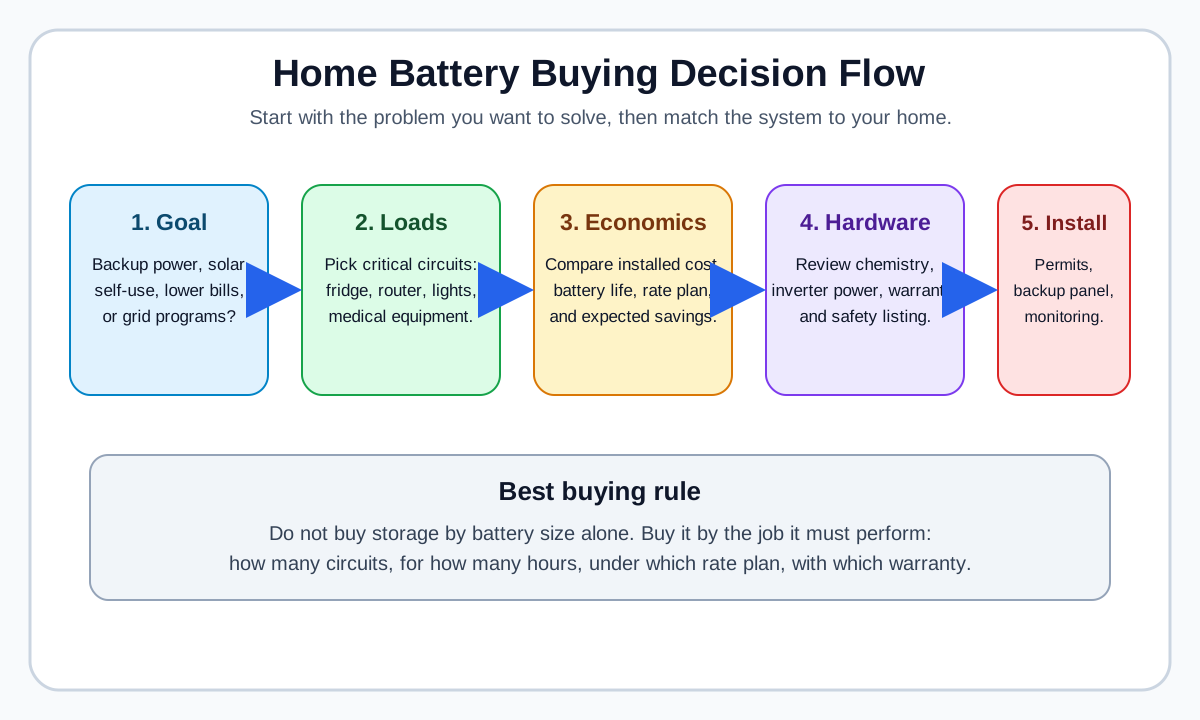
Battery storage has become a mainstream conversation because homes are using more electricity, storms are disrupting service more often, and solar customers want more control over when they use the energy they produce. Recent buying guides from Battery Tech Online and Canary Media both emphasize starting with the problem the battery needs to solve, then matching the system to that job.
In Texas, the discussion is especially relevant because severe weather, high summer demand, and local distribution outages can create real household disruption. The U.S. Department of Energy’s solar and resilience basics explains why backup design is different from simply having solar panels, and a neighborhood outage from a storm, equipment failure, or local line issue can still turn into hours without power even when the broader grid is operating normally.
The trend is already showing up in new construction. HousingWire reported that some Texas builders are offering built-in backup battery programs and that roughly 70% of buyers in certain new-build communities have said yes to the option. The broader market conversation has also reached national and international outlets, including the Financial Times, reflecting a shift from “amenity” to “resilience” for many buyers.
2. What a Home Battery Actually Does
A home battery stores electricity and releases it later. It may charge from solar panels, from the grid during lower-cost hours if the system and plan allow it, or from both. When paired with a properly configured inverter and transfer equipment, the battery can also separate part of the home from the grid during an outage and keep selected circuits energized.
The most important distinction is energy capacity versus power output. Capacity, measured in kilowatt-hours (kWh), tells you how much energy is stored. Power output, measured in kilowatts (kW), tells you how much load the battery can serve at one time. A battery may have enough total energy for several hours, but still not be able to start or run every major appliance at once.
That is why most battery quotes should include a load conversation, not just a product brochure. Refrigerators, internet routers, lights, garage doors, medical devices, and a small HVAC zone are very different design targets than whole-home air conditioning, pool equipment, electric ovens, and EV charging.
Backup-first buyer
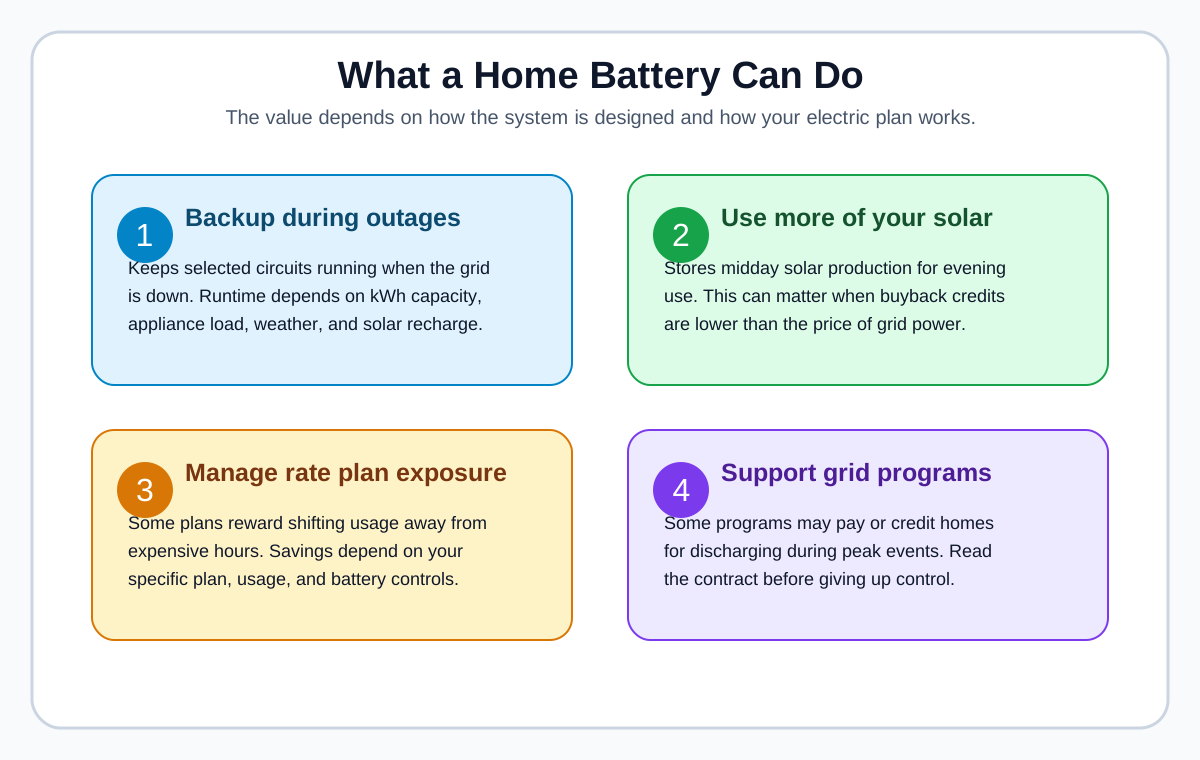
The main value is outage protection. The battery is sized around critical circuits and runtime, even if pure bill savings are modest.
Savings-first buyer
The main value is using stored solar or lower-cost grid energy during higher-cost periods. The result depends heavily on your rate plan and usage pattern.
3. Solar Battery, Standalone Battery, or Generator?
A solar-plus-battery system is usually the most flexible approach because the battery can recharge during the day when the sun is available. The Independent’s overview of solar battery storage explains the basic solar-and-storage relationship for homeowners, while a standalone battery can still provide backup power but generally needs the grid or another charging source to refill after a long outage.
Compared with a fuel generator, a battery is quiet, automatic, and does not require gasoline, diesel, or natural gas combustion at the home. A generator can often run longer if fuel is available, but it requires maintenance, safe ventilation, and fuel reliability. Many homeowners compare the two based on whether they want short-duration automatic backup or extended outage coverage.
For Texas homeowners with rooftop solar, a battery can also change the value of the solar system. Instead of sending excess solar back to the grid at a buyback credit, the home may store that energy and use it later when grid power would otherwise be purchased at the retail rate. That is why the value depends on the spread between your electric plan’s import price and solar buyback credit.
4. The Money Question: Will It Actually Save You Money?
A home battery can save money, but it is not automatic. Energy Matters and Zecar both frame the decision around installed cost, usage pattern, solar export value, and rate design, not simply the battery nameplate size. The financial case is strongest when the battery lets you avoid buying expensive electricity, use more of your own solar, participate in a valuable demand-response or virtual power plant program, or avoid costs that matter to your household during outages.
The savings calculation should start with your last 12 months of usage, your solar production if you have it, your current electric plan, and the exact installed price of the battery system. The Conversation’s article, “Racing to buy a home battery? Read this first”, reinforces the need to slow down and check the economics before treating storage as an automatic purchase. A simple payback estimate that ignores installation, controls, battery degradation, financing costs, rate-plan changes, and warranty limits can make a system look better than it really is.
For many Texas customers, the “worth it” answer may be more about resilience than pure payback. The Independent has also covered how home batteries are being discussed as protection against energy-price exposure, but the personal value can be just as practical: keeping a refrigerator cold, internet online, medical equipment running, and basic lights on during an outage.
5. Current Incentives and Tax-Credit Caution
In prior years, many homeowners evaluated batteries around the federal Residential Clean Energy Credit. Current IRS guidance states that the credit equals 30% of qualified clean energy property installed from 2022 through December 31, 2025, and that the credit is not available for property placed in service after December 31, 2025.
That makes timing important for 2026 shoppers. Do not assume a quote still qualifies for the federal credit unless your tax professional and installer can confirm the placed-in-service date and the current law for your situation. ENERGY STAR’s battery storage guidance also highlights eligibility details such as new equipment, qualifying residences, and battery storage capacity requirements.
Local utility programs, manufacturer promotions, builder programs, and virtual power plant contracts may still affect economics, but each program should be reviewed carefully. Ask who controls the battery, when it can discharge, how compensation is calculated, whether backup reserve is protected, and whether participation can be cancelled.
6. How to Size a Home Battery
Sizing begins with a critical-load list. Decide what must run during an outage and what can wait. A practical backup panel might include refrigerator circuits, a freezer, selected lights, internet equipment, garage-door openers, security equipment, medical devices, and a few outlets.
Next, estimate runtime. A smaller battery may cover basic loads for a short outage, while a larger system may support more circuits or longer service. Solar recharge can extend runtime, but cloudy weather, winter production, panel orientation, and shade all matter.
Ask the installer to show the math in plain language. You want to see estimated load in watts, battery capacity in kWh, usable capacity after reserve settings, expected runtime, and what happens when multiple appliances start at the same time.
7. Safety, Chemistry, Warranty, and Installation
Battery chemistry matters. Lithium iron phosphate, often called LFP, has become common in stationary storage because many manufacturers view it as a stable chemistry for home systems. NREL’s residential battery storage reference also shows why performance assumptions, cost assumptions, and useful life matter when comparing systems. Other chemistries can also be used safely when designed, listed, installed, and maintained correctly.
Homeowners should ask for documentation on equipment listings, code compliance, permitting, location requirements, spacing, temperature range, monitoring, and emergency shutoff. A battery installed in a garage, outside wall, utility room, or dedicated equipment area may have different requirements.
The warranty should be reviewed like a contract. Look for covered years, throughput limits, retained capacity at the end of the warranty, labor coverage, transferability, monitoring requirements, and exclusions. A 10-year warranty is common, but two 10-year warranties can be very different once you read the details.
8. Questions to Ask Before Signing a Battery Quote
Before buying, ask the installer to answer these questions in writing. The goal is to compare systems based on real use, not sales language.
- What exact circuits will be backed up?
- How many kWh are usable after backup reserve settings?
- What is the continuous and peak power output?
- Can the system start my HVAC equipment, well pump, pool equipment, or other motor loads?
- How will the battery operate during an outage if solar is also producing?
- What is the installed price before and after any confirmed incentives?
- What warranty limits apply to cycles, throughput, and end-of-life capacity?
- Can I keep a backup reserve if I join a grid-services program?
- What app, monitoring, and service support are included?
- Who handles permits, utility approvals, and inspection?
9. What Texas Electricity Shoppers Should Watch
Texas is a competitive retail electricity market in much of the state, so the electric plan can materially change the value of a battery. A flat-rate plan, a free-nights plan, a time-of-use plan, and a solar buyback plan can create very different charging and discharging strategies.
Delivery charges still matter too. In deregulated areas, delivery companies such as Oncor, CenterPoint, AEP Texas, TNMP, and LP&L maintain poles, wires, meters, and local outage restoration. A battery can help your home ride through an outage, but it does not eliminate delivery charges or replace the need for utility restoration.
If you are comparing retail electric plans, check whether the plan allows battery charging from the grid, whether solar exports are credited, whether credits roll over, and whether there are special rules for distributed generation. A battery decision and a rate-plan decision should be modeled together.
10. Bottom Line: When a Battery Makes Sense
A home battery makes the most sense when the buyer has a clear reason for buying it. It may be worth it for outage protection, solar self-consumption, rate-plan optimization, participation in a grid program, or a mix of those benefits.
It is less attractive when the system is oversized, the installer cannot explain the runtime math, the warranty is weak, the rate plan does not reward shifting usage, or the homeowner expects whole-home backup from a system designed only for critical loads.
The best decision is not “battery or no battery.” The best decision is matching the right battery size, inverter, backup panel, solar design, electric plan, and warranty to the way your household actually uses power.
FAQ
Can a home battery run my whole house?
Sometimes, but whole-home backup requires enough battery capacity, inverter power, and electrical design. Many systems are built for critical loads instead.
Is a battery worth it without solar?
It can be useful for short-duration backup or rate-plan shifting, but it usually has less outage endurance than a solar-plus-battery system because it cannot recharge from the sun.
Should I buy the biggest battery I can afford?
Not automatically. A better approach is to size the system around critical loads, desired runtime, warranty, installation cost, and the electric plan you will actually use.