The best energy plan for your home
Last Updated: April 29, 2026
Texas electricity bill guide
Texas Delivery Charges Explained: Historical TDU / TDSP Rate Trends
Delivery charges are one of the most misunderstood parts of a Texas electric bill. They can change even when a customer is on a fixed-rate electricity plan, and they apply no matter which retail electric provider the customer chooses.
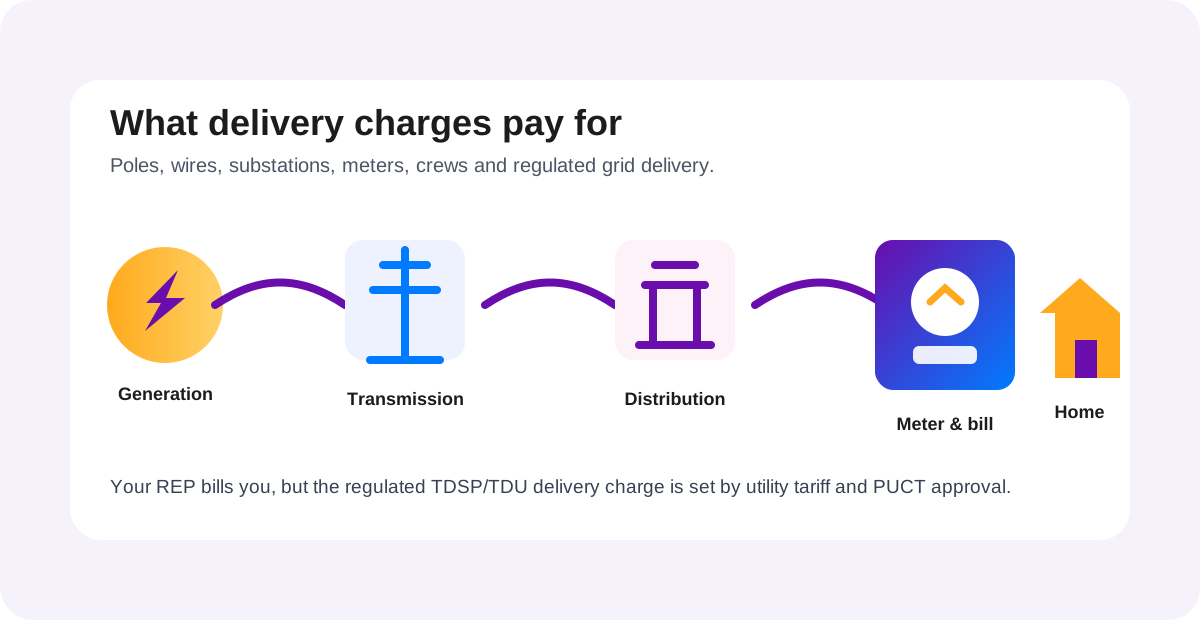
What are delivery charges?
In Texas, the company that sells electricity is usually the retail electric provider, or REP. The company that owns the local poles, wires, meters and delivery infrastructure is the Transmission and Distribution Utility, also called the TDU or TDSP.
That means a customer can shop for the energy supply portion of the bill, but the local delivery company is determined by the service address. Customers in deregulated Texas areas may see Oncor, CenterPoint, AEP Texas, TNMP or LP&L depending on where the meter is located.
What you can shop
You can compare retail plans, contract terms, renewable options, bill-credit structures, base charges and early termination fees.
What you cannot shop
You generally cannot choose your TDSP unless you move to an address served by a different delivery company.
Why delivery charges show up on your bill
Delivery charges pay for the physical grid that gets power to a home or business. This includes transmission lines, distribution lines, transformers, substations, meters, vegetation management, storm restoration, and crews that respond when the power goes out.
The REP sends the bill, but the delivery charge is a regulated pass-through charge. Some plans show it as a separate line item, while other plans bundle delivery into the advertised price and then adjust when TDSP rates change.
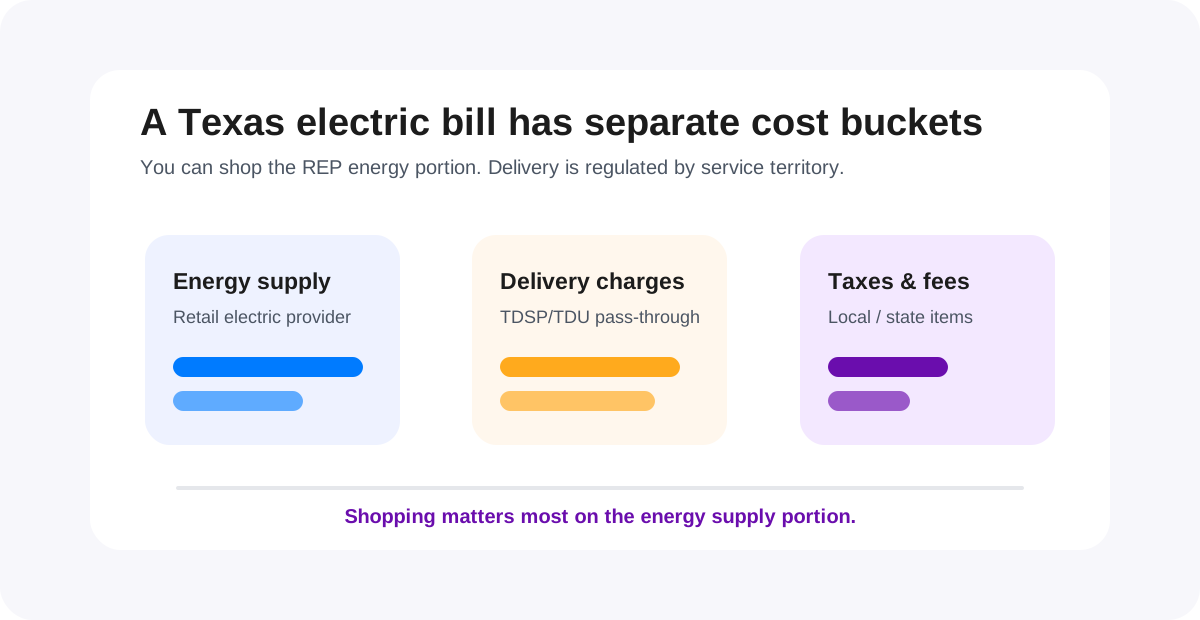
How delivery rates are built
Residential delivery charges usually have two main pieces: a fixed monthly charge and a usage-based charge for each kilowatt-hour delivered. A customer using 1,000 kWh in a month pays the fixed monthly charge plus 1,000 times the per-kWh delivery charge.
For example, if the monthly charge is $4.23 and the usage charge is 5.6183¢ per kWh, the delivery portion at 1,000 kWh would be about $60.41 before other bill items. That amount is separate from the REP energy supply rate.
Why delivery charges change over time
TDSP rates move because the cost of maintaining, repairing and expanding the grid changes. Growth in Texas, storm-hardening work, transmission upgrades, vegetation management, financing costs and regulatory rate cases can all influence delivery rates.
Delivery charges often update around March and September, but utility rates can also change at other times when a tariff, rider, surcharge or approved settlement becomes effective. That is why a “fixed-rate” plan can still show a different all-in price when regulated delivery rates change.
Current embedded residential delivery charges
The following table is included as a customer-friendly snapshot from the embedded historical-rate data in this article. Before using these numbers in production pricing, reconcile them against the current PUCT rate page and each utility tariff.
| TDSP / TDU | Effective date | Monthly charge | Per-kWh delivery charge | Est. delivery cost at 1,000 kWh |
|---|---|---|---|---|
| Oncor | Apr 11, 2026 | $4.23 | 5.6183¢ | $60.41 |
| CenterPoint | Apr 11, 2026 | $4.90 | 4.9993¢ | $54.89 |
| AEP Texas Central | Apr 11, 2026 | $3.24 | 5.8007¢ | $61.25 |
| AEP Texas North | Apr 11, 2026 | $3.24 | 5.6677¢ | $59.92 |
| TNMP | Apr 11, 2026 | $7.85 | 6.4665¢ | $72.52 |
| LP&L | Apr 11, 2026 | $0.00 | 6.3120¢ | $63.12 |
Historical delivery-rate chart
| TDSP / TDU | Effective date | Monthly charge | Per-kWh charge | 1,000 kWh delivery estimate |
|---|
Interactive chart: historical residential TDSP delivery charges based on public historical rate records.
What the historical numbers show
The long-term pattern is clear: delivery charges are no longer a small background item on many Texas electric bills. The per-kWh delivery component has generally moved higher across the major deregulated service territories, though the timing and size of each change differs by utility.
One unusual feature in the data is the sharp drop around March 2023 followed by a return to much higher levels later in 2023. That makes it important to look at a multi-year view instead of comparing only one month to the next.
| TDSP / TDU | First comparable date | Then | Latest | Change |
|---|---|---|---|---|
| Oncor | Mar 1, 2020 | 3.5271¢ | 5.6183¢ | +59.3% |
| CenterPoint | Mar 1, 2020 | 3.4485¢ | 4.9993¢ | +45.0% |
| AEP Texas Central | Mar 1, 2020 | 4.2286¢ | 5.8007¢ | +37.2% |
| AEP Texas North | Mar 1, 2020 | 3.5805¢ | 5.6677¢ | +58.3% |
| TNMP | Mar 1, 2020 | 4.1194¢ | 6.4665¢ | +57.0% |
| LP&L | Jan 31, 2024 | 6.4420¢ | 6.3120¢ | -2.0% |
How this affects shopping for electricity
Customers should not compare plans by the energy charge alone. A plan with a low energy charge can still have a higher estimated bill if the customer does not account for delivery charges, base charges, bill credits, usage tiers and monthly fees.
- Use the Electricity Facts Label to see whether delivery is bundled or passed through separately.
- Compare plans at realistic usage levels, not just at 500, 1,000 or 2,000 kWh.
- Remember that TDSP changes can affect fixed-rate contracts because delivery charges are regulated separately.
- For business customers, demand charges and meter class can make delivery costs even more important.
Common mistakes customers make
The most common mistake is assuming that “fixed rate” means every part of the bill is fixed. In many Texas plans, the energy supply price is fixed but regulated delivery charges can still change during the contract term.
Another mistake is comparing only the advertised cents-per-kWh price without reviewing the plan details. Bill credits, minimum usage fees and base charges can change the real cost dramatically when usage is above or below the advertised example.
FAQ
Can I avoid delivery charges?
No. Delivery charges apply because power must be delivered through the local grid to the meter.
Do all providers charge the same delivery rate?
For the same customer class and TDSP territory, the approved delivery charge should be passed through without REP markup.
Why did my bill change during a fixed-rate contract?
Your REP energy rate may be fixed, but PUCT-approved delivery rates can change separately.
Using the official PUCT and utility tariff pages
The PUCT current-rate page is the best starting point for current delivery rates and links to the delivery-company tariff pages. Tariffs contain the detailed schedules, riders and descriptions that sit behind the simplified delivery-charge line on a residential bill.
For customer education, The Power Choice can use the historical view to explain why bills change. For quoting and compliance-sensitive work, current rates should be checked against the PUCT and utility tariff sources at the time a quote is prepared.