The best energy plan for your home
Last Updated: May 28, 2026
Texas electricity guide
Daylight Saving Time and Your Texas Energy Bill
Changing the clock does not change your electric rate, but it can change when your home or business uses power. For Texas customers, the biggest bill question is not just “is there more daylight?” It is whether that daylight changes air conditioning, lighting, work schedules, peak demand or the plan you are currently on.
Why this topic is back in the news
Daylight saving time is receiving fresh attention because lawmakers have revived the Sunshine Protection Act, a proposal to make daylight saving time permanent in most states. Recent coverage from Reuters, LiveNOW from FOX, The Hill, USA Today, Syracuse.com and Yahoo News explains that the idea has moved forward but is not law yet.
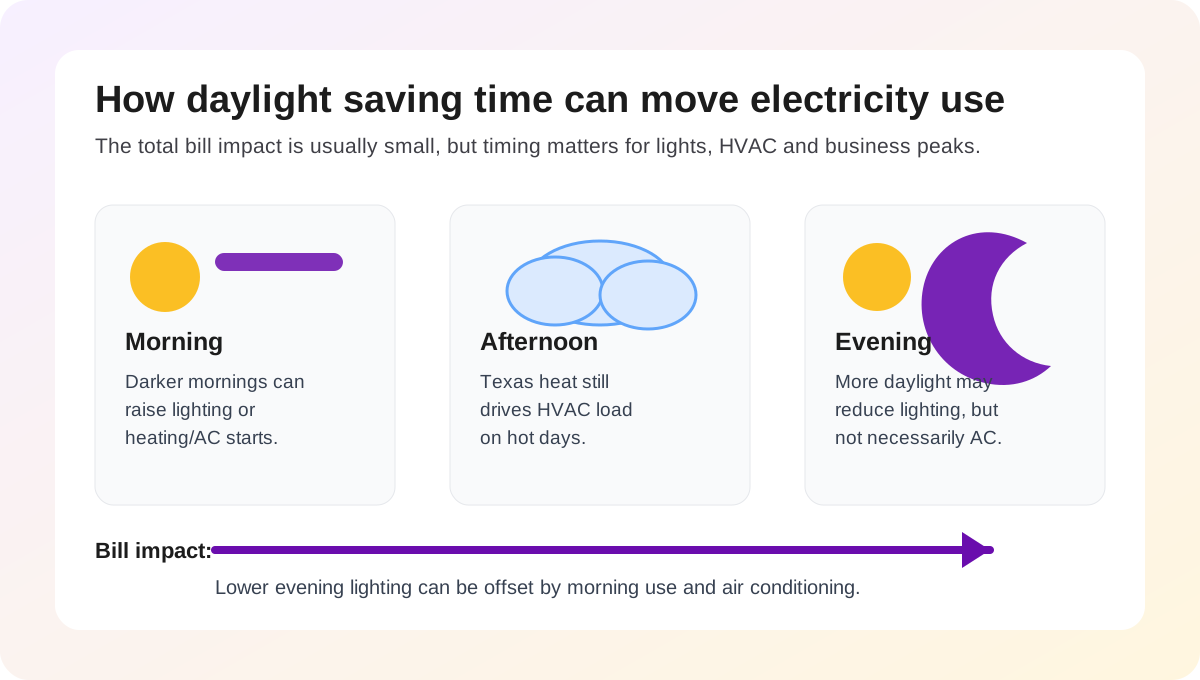
The proposal matters for energy customers because permanent daylight saving time would keep more daylight in the evening during winter. That could reduce some evening lighting, but it may also push more dark-hour activity into the morning, when families, schools and businesses are starting the day.
What changes today?
Under the current schedule, Texas clocks moved forward on March 8, 2026 and are scheduled to fall back on November 1, 2026, according to timeanddate.com’s Texas daylight saving calendar.
What would permanent DST do?
The active Senate bill summary on Congress.gov describes the Sunshine Protection Act of 2025 as making daylight saving time the new permanent standard time, while allowing certain exempt areas to remain on standard time.
Does daylight saving time actually save energy?
The honest answer is: sometimes a little, sometimes not much, and the result can vary by region. A U.S. Department of Energy report archived by OSTI.gov found that the 2007 extension of daylight saving time saved about 1.3 terawatt-hours of electricity, equal to about 0.5% per day of the extended period and only about 0.03% of annual U.S. electricity consumption.
That same DOE summary is useful for Texas because it says electricity savings generally occurred in the evening, while small increases occurred in the morning. It also notes that southern areas showed smaller savings, possibly because additional air-conditioning use offset some lighting savings.
How daylight saving time can affect a residential bill
For a Texas home, daylight saving time can reduce the need to turn lights on early in the evening. But lighting is no longer the dominant part of many bills because LED bulbs are efficient and air conditioning is often the bigger load.
The more important question is how your thermostat behaves. If more daylight encourages evening activity, cooking, laundry, pool pumps or lower thermostat settings, usage can rise even when lights stay off longer.
- Spring forward: evenings feel brighter, but mornings are darker for a period of time.
- Hot Texas evenings: longer daylight can keep a home warmer later, which may extend cooling time.
- Smart thermostats: schedules should be checked after the time change so they do not run comfort settings earlier than intended.
How it can affect a business customer
For commercial customers, the issue is more than total kWh. A shop, office, church, warehouse or small manufacturer may care about when demand occurs, especially if the business has peak demand charges or equipment that starts at the same time each morning.
If a company opens before sunrise, permanent daylight saving time could mean more winter lighting and HVAC start-up in the dark. If a business has more customer activity in brighter evening hours, usage could move later in the day instead.
| Customer type | Possible DST bill impact | Best action |
|---|---|---|
| Residential home | Small usage shift from evening lighting to morning routines; AC can outweigh lighting savings. | Review thermostat, pool pump and laundry schedules after each clock change. |
| Retail or restaurant | Brighter evenings may support more after-work traffic and longer occupied hours. | Watch closing-time HVAC and exterior lighting schedules. |
| Office or warehouse | Darker winter mornings can add lighting and equipment start-up during opening hours. | Stagger equipment start times and review demand peaks. |
| Manufacturing | Shift timing can matter if motors, compressors or HVAC start together. | Use interval data to identify avoidable peaks. |
Oncor and CenterPoint customers: why delivery territory matters
In deregulated Texas, your retail electric provider sells the energy plan, while your delivery utility maintains poles, wires and delivery service. Customers in Oncor and CenterPoint territories can shop retail supply offers, but the delivery utility still affects the delivery charge portion of the bill.
Daylight saving time will not change the delivery utility assigned to your address. It may, however, change how your home or business uses power during certain hours, and that is why it is smart to review usage and compare plan options before summer heat or winter morning routines create surprises.
Compare business electricity rates in Oncor and CenterPoint areas
For business customers, use the snapshots below as a starting point for commercial rate shopping. The final rate depends on ZIP code, usage profile, term length, start date and available retail electric provider offers.
Oncor business rate snapshot
Sample ZIP: Dallas 75201. Use the ZIP box above for customer-specific shopping.
CenterPoint business rate snapshot
Sample ZIP: Houston 77002. Use the ZIP box above for customer-specific shopping.
Simple ways to keep the time change from raising your bill
The best savings strategy is not arguing over the clock. It is making sure your house or business schedule matches the way people actually use the space.
- Check thermostat schedules the week after the time change.
- Use LED bulbs and outdoor photocells so lights respond to actual daylight, not just a clock.
- Move pool pumps, EV charging, dishwashers and laundry away from high-use evening periods when possible.
- For commercial accounts, review interval usage for morning start-up spikes and after-hours HVAC run time.
- Shop your plan before a high-usage season. Start at The Power Choice and compare options by ZIP code.
FAQ
Will permanent daylight saving time automatically lower my Texas electric bill?
No. It could lower some evening lighting use, but air conditioning, morning routines and business schedules can offset that savings.
Does daylight saving time change my electric rate?
No. Your rate comes from your retail electric plan and delivery charges. The clock can change usage patterns, not the cents-per-kWh rate itself.
Should business customers care more than residential customers?
Often yes. Businesses may have start-up peaks, longer operating hours or demand charges that make timing more important.
Further reading & sources
- Reuters: U.S. lawmakers propose making daylight saving time permanent again
- LiveNOW from FOX: U.S. lawmakers revive bill to make daylight saving time permanent
- The Hill: Permanent daylight saving time legislation gains traction
- USA Today: Republican lawmakers advance permanent daylight saving time bill
- Syracuse.com: Bill to make daylight saving time permanent moves forward
- Yahoo News: Trump touts permanent daylight saving time
- Congress.gov: Sunshine Protection Act of 2025
- U.S. Department of Energy / OSTI: Impact of Extended Daylight Saving Time on National Energy Consumption