Cheapest Business Electricity Rates in Texas: How to Compare Commercial Plans
A cheap business electricity rate can help protect your margins, but the best plan is not always the lowest number on a rate table. The right choice depends on your delivery area, meter type, usage pattern, contract length, and how soon your current agreement expires.
Quick answer for Texas business owners
For many small businesses, a 12-month fixed-rate plan is a practical starting point because it is easy to compare and avoids month-to-month price uncertainty. For larger users, restaurants, warehouses, offices, churches, and retail stores, a longer contract may be worth considering when wholesale pricing, demand growth, or seasonal risk makes future renewals less predictable.
Texas business electricity is competitive in many areas, but your final price is shaped by both the retail electric provider and the delivery utility that serves the meter. In deregulated areas, delivery companies such as Oncor, CenterPoint, AEP Texas, TNMP, and LP&L handle the poles, wires, and outage response while retail providers compete for the supply portion of your bill.
Best for simple comparison
Start with 12-month fixed commercial plans in your TDSP area. This keeps the term consistent and makes rate differences easier to understand.
Best for budget protection
Ask about 24-, 36-, or longer-term options when your business needs price stability or when your renewal window lands in a high-demand season.
Why business electricity rates change in Texas
Commercial electricity pricing can move because of fuel costs, weather, ERCOT market prices, congestion, reserve expectations, and local delivery charges. ERCOT publishes Day-Ahead and Real-Time Market price information, and its System-Wide Demand dashboard shows current and forecasted load conditions for the grid.
Growth is another pressure point. ERCOT’s April 2026 long-term load forecast noted that Texas is adding new load rapidly, including large customers such as data centers, cryptocurrency mining, industrial operations, and oil and gas processes. That does not mean every business should rush into the longest possible term, but it does mean renewal timing deserves attention.
What a business electricity rate includes
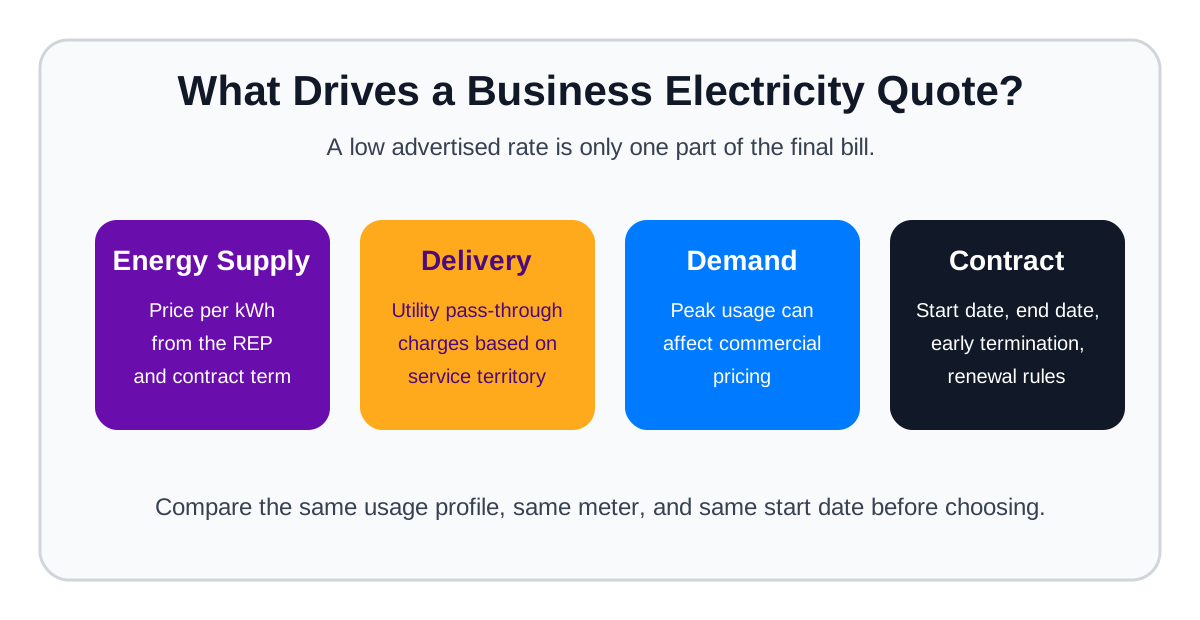
A commercial rate table usually shows the energy supply price, but a full bill may include more than that. Before signing, compare the full quote details instead of only looking at the largest advertised number.
| Bill item | What it means | Why it matters |
|---|---|---|
| Energy supply | The retail provider’s charge for electricity supply, usually shown in cents per kWh. | This is the easiest item to compare across fixed-rate offers. |
| TDSP delivery | Charges from the delivery utility for poles, wires, meters, and local delivery service. | These vary by service territory and may change through utility-approved tariffs. |
| Demand or load factor | How much power your business uses at peak times compared with total usage. | Businesses with sharper peaks may be priced differently than steady-load accounts. |
| Contract terms | Start date, term length, early termination fee, renewal process, and product type. | A cheap rate can become expensive if the renewal language or timing is wrong. |
Compare current 12-month business rates by delivery area
Use the rate cards below as a starting point for a Texas commercial electricity comparison. The cards are separated by delivery area because the same business may see different pricing in Dallas, Houston, West Texas, the Gulf Coast, or a newly deregulated area.
How to compare business plans the right way
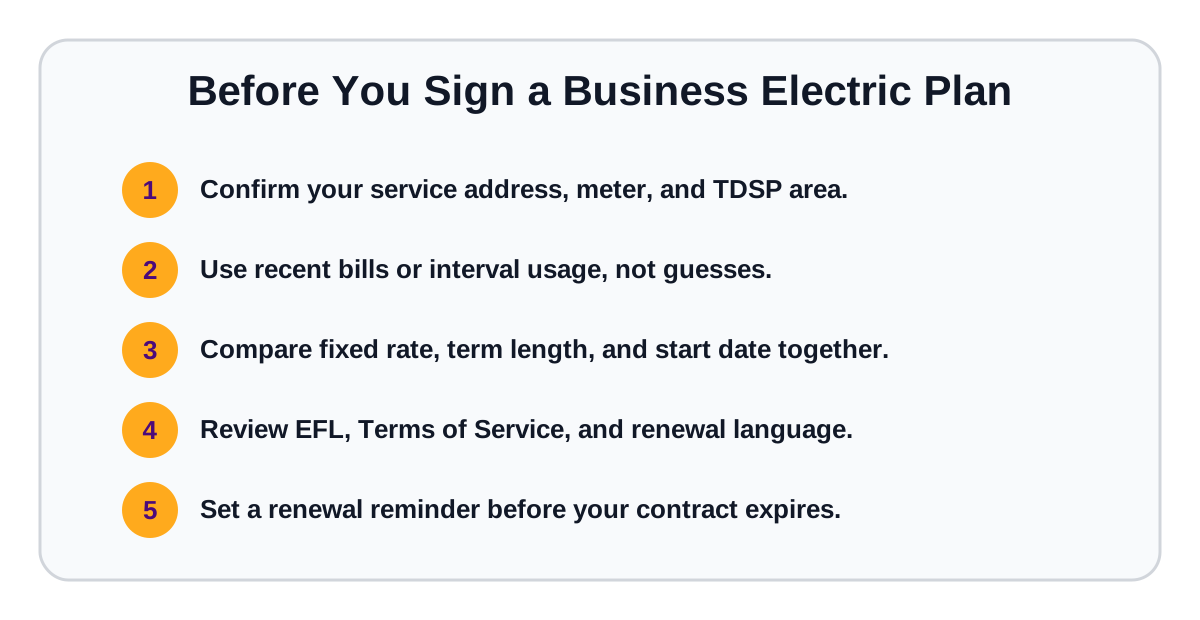
A rate comparison works best when every provider is quoting the same business profile. Gather a recent bill, your service address, ESI ID if available, current contract expiration date, and 12 months of usage when you can access it.
- Confirm your delivery utility and meter type before comparing rates.
- Compare fixed-rate offers with the same start month and similar term length.
- Ask whether the quote includes all pass-through delivery charges or only supply.
- Review the early termination fee and renewal process before authorizing service.
- Put your next renewal date on the calendar at least 60 to 90 days ahead of expiration.
Which contract length should a business choose?
The best term depends on how your business uses electricity and how much budget certainty you need. Shorter terms may help if you expect rates to fall, while longer terms may help protect against renewal risk during high-demand periods.
| Term | Good fit | Watch for |
|---|---|---|
| 12 months | Businesses that want simple annual comparisons and flexibility. | Your next renewal could fall in a more expensive season. |
| 24 to 36 months | Businesses that want rate stability without locking in for too long. | Compare the total value, not just the first-month rate. |
| 48 to 60 months | High-usage businesses that prioritize budget certainty. | Make sure growth, relocation, or equipment changes will not make the term a poor fit. |
| Month-to-month | Temporary situations, construction meters, or short bridge periods. | Usually less predictable and not ideal as a long-term strategy. |
Documents to review before signing
Before authorizing a new commercial electricity plan, review the Electricity Facts Label, Terms of Service, Your Rights as a Customer document when applicable, and any enrollment authorization. The PUCT retail electric provider disclosure rules and ERCOT’s Labeling of Electricity information are helpful references for understanding standardized disclosures and renewable-content claims.
For small commercial customers, the EFL format can show average prices at commercial usage levels and, when demand charges apply, assumptions such as load factor. That is why a business should avoid choosing a plan from a headline rate alone.
Common mistakes that make a cheap rate expensive
- Comparing one plan’s supply rate against another plan’s all-in price.
- Waiting until the contract expires and rolling to a default or variable product.
- Ignoring demand profile for restaurants, warehouses, manufacturing, or large HVAC loads.
- Signing a term that ends during a known high-demand shopping window.
- Not checking whether the business is moving, expanding, or changing operating hours.
FAQ
Is the cheapest commercial electricity rate always the best plan?
No. A cheaper rate can lose value if the term, delivery charges, demand assumptions, or renewal language do not fit your business.
How far ahead should a Texas business shop?
Many businesses should begin comparing 60 to 90 days before expiration, and some providers may quote farther ahead depending on the start date.
Do delivery charges change when I switch providers?
Your delivery utility usually stays the same. The retail provider changes, but the local TDSP still handles delivery and outages.